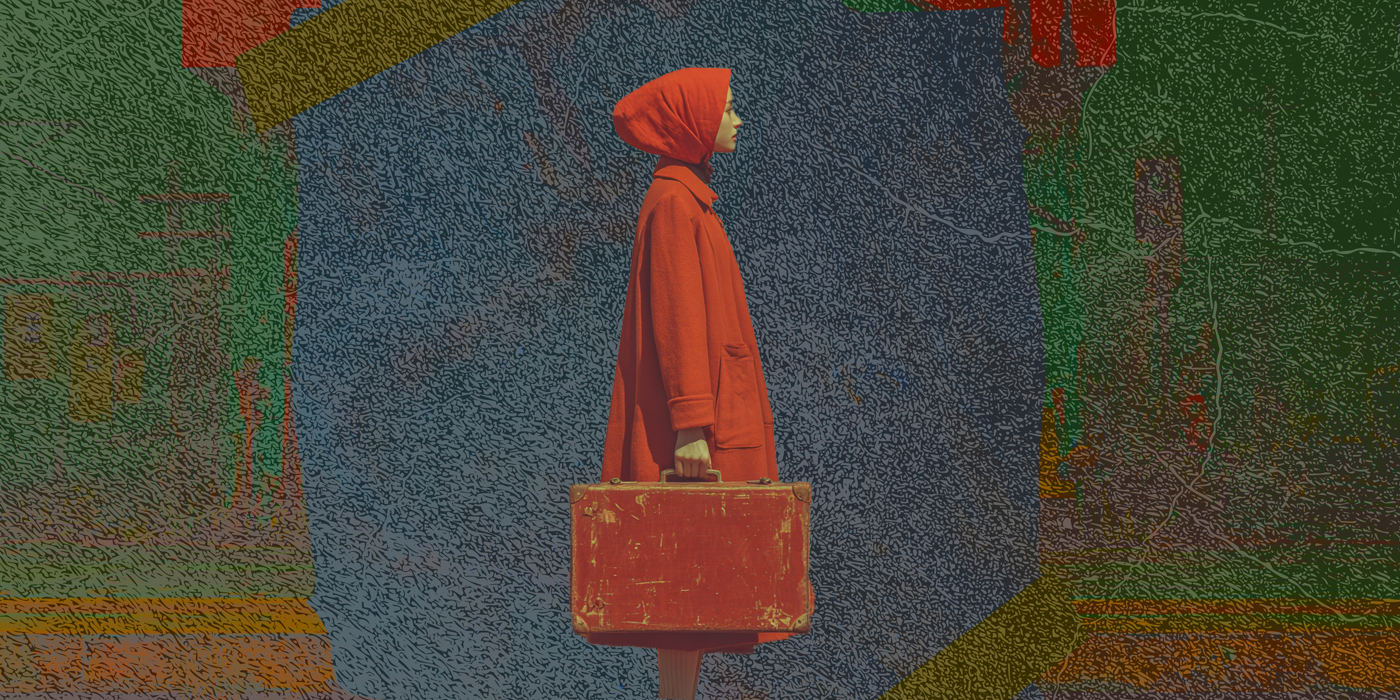
There are songs you hear and immediately know you will never forget them. El-Shayyalin by Rima Khcheich is one of those. I don't remember exactly how I found it — the way you never quite remember how you find the things that matter — but I remember exactly where it took me.
It was a period of change in my life. One of those moments that feels heavy while you're inside it, and only later — much later — you understand it was actually the beginning of something better. The kind of transition that doesn't announce itself as good news.
I was on a train to Zurich, accompanying a friend to see her boyfriend. Outside the window, Switzerland was doing what Switzerland does — clean light, ordered landscapes, the particular silence of a country that has decided to be beautiful. And in my ears, Rima Khcheich.
"El-Shayyalin means the wanderers — those who carry something heavy and keep moving. I understood it before I understood the words."
When I love a song, I listen to it obsessively. On repeat, for days, until it becomes part of the texture of a moment — inseparable from the light, the smell, the feeling in the chest. El-Shayyalin became the soundtrack of that transition. I wore it like a coat.
I remember a sunny afternoon in Zurich, a window open, and Rima's voice spreading out into the street below. Something Lebanese and ancient drifting through a Swiss city. There was something almost funny about it — and something exactly right.
Rima Khcheich is a Lebanese singer and oud player, one of the most important voices in contemporary Arab music. Her work sits at the intersection of classical maqam tradition and something more intimate — ancient in material, modern in feeling. She doesn't perform songs. She inhabits them.
What strikes me, coming from a world of visual communication, is how much this music does with how little. A voice. An oud. Space. Every note feels chosen. Every pause is part of the composition.
I taught myself to read Arabic alone — and songs like this are part of why I decided to keep going. But music — like the best visual design — doesn't require translation. It arrives directly.
Strange, that a Lebanese singer reminds me of Switzerland. But that's what songs do. They attach themselves to the moments that need them most — and stay there forever.
It is because of songs like this that I decided to study Arabic. Because they reach you before the words do. And that, I think, is the highest thing music can do.
Press play.