Discover Petra
with Ahmad

Client

SELA JO
Sela is a non-profit company founded in 2015 by five members of the communities living in the surroundings of the World Heritage site of Petra with the aim of actively engaging Jordanians in the protection of their cultural heritage.

Scope

Creative Direction · Cultural Strategy · Narrative Design · Character Design · Art Direction · Bilingual Book AR/EN · Museum Collateral · Interactive Experience

Year

2025

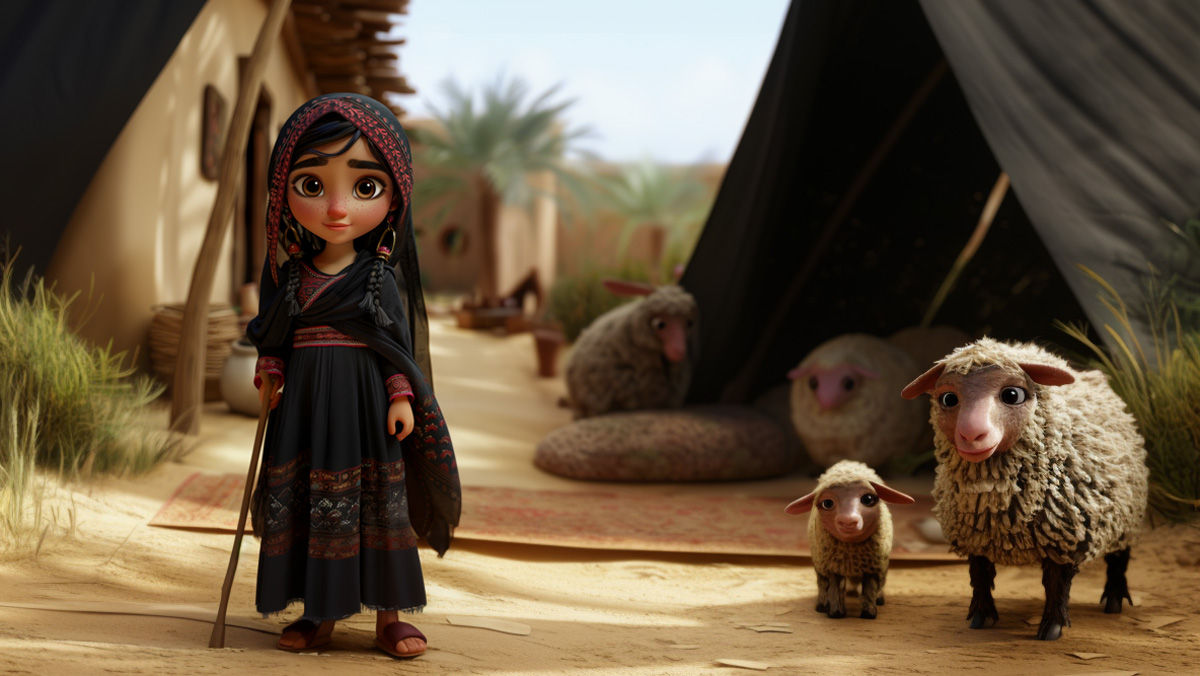
Naima — Ahmad's maternal grandmother Fatima — character from the Discover Petra project
01 — Concept

A City Through a Child's Eyes

This project required something beyond design — a complete creative vision. I served as Creative Director for the entire experience: defining the narrative strategy, building the world, writing the bilingual story, designing the characters, and directing every visual and editorial decision from concept to deployment across Petra Archaeological Park.

"Discover Petra with Ahmad" is an interactive project designed to bring the ancient Nabataean city to life for children and families visiting the archaeological park. The brief was to create an engaging, bilingual experience — in Arabic and English — that could transform a museum visit into an adventure.

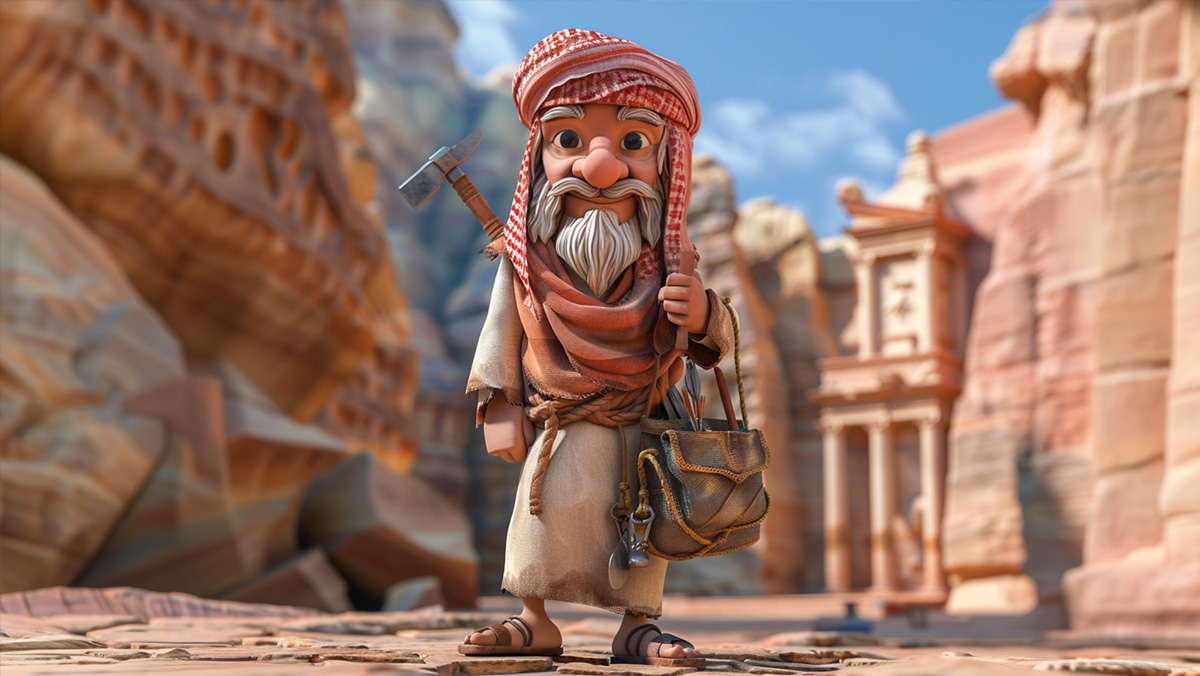
Ahmad is a young Bedouin boy whose family has lived among the rocks of Petra for generations. He becomes the guide — curious, brave, and rooted in the land — who leads visitors through the wonders of the city: the Nabataean hydraulic system, the pink sandstone carvings, the desert ecology, the stories of the Bedouin people.

The visual language draws from Jordanian craft tradition — embroidery patterns, desert colors, Nabataean script — translated into a warm, Pixar-inspired 3D aesthetic that children immediately connect with.
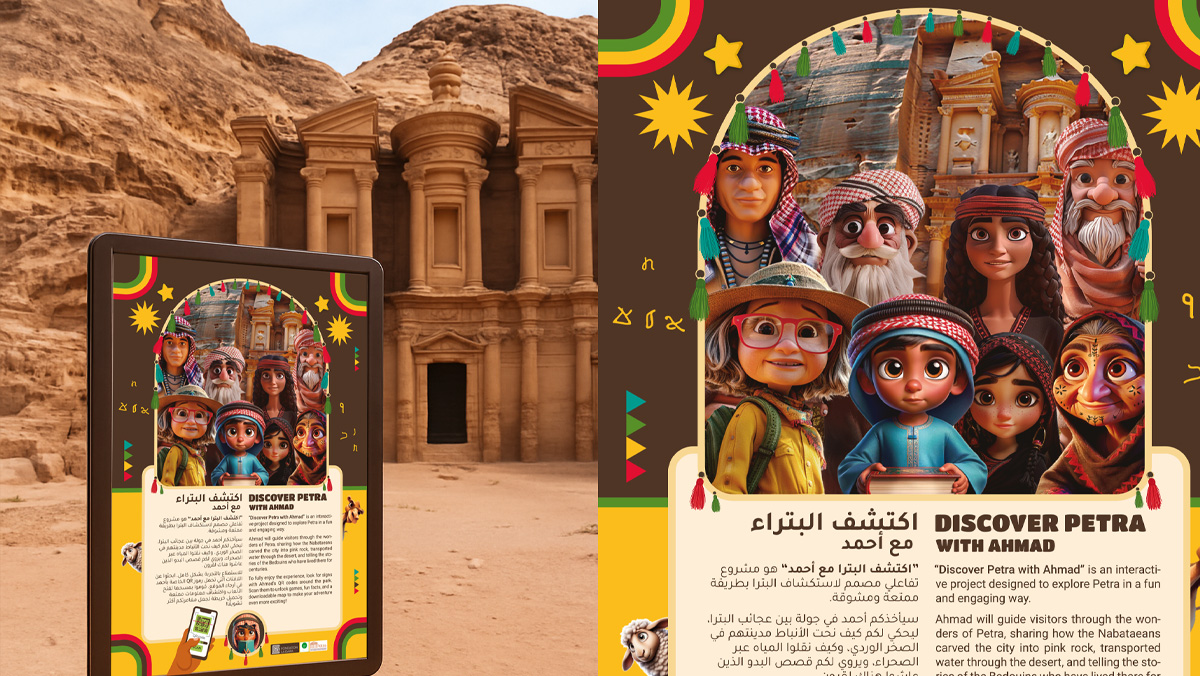
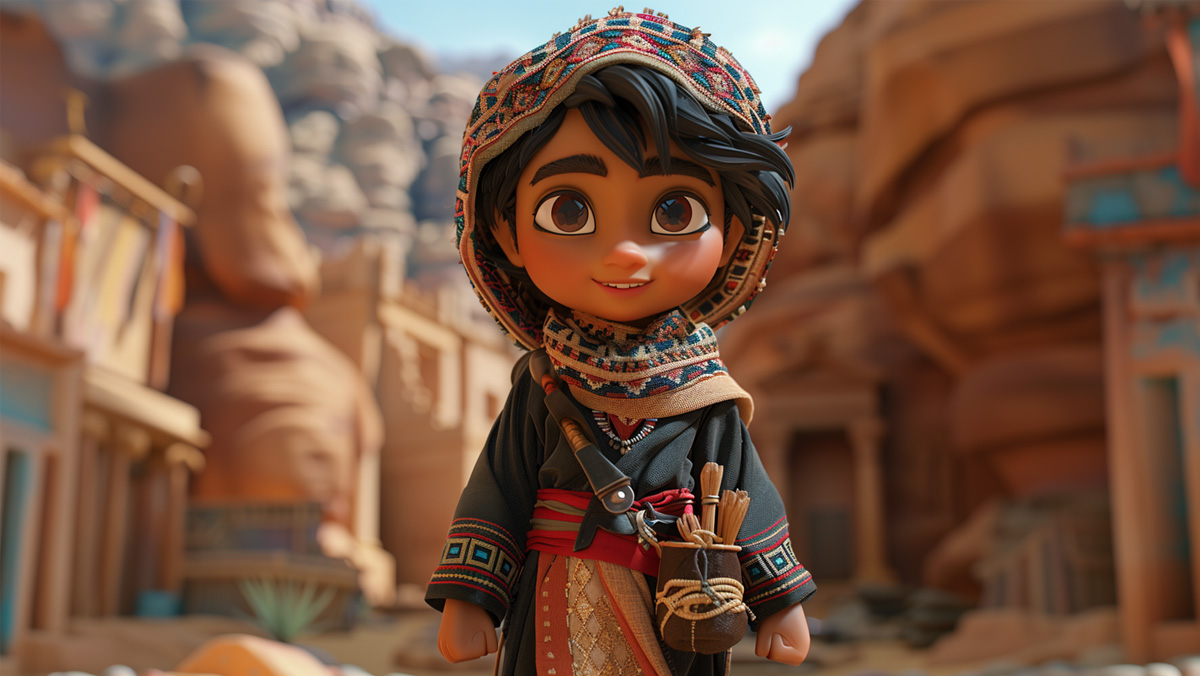
Discover Petra with Ahmad — project poster Young Bedouin — character from the Discover Petra project
02 — Character Design

A Cast of Ten

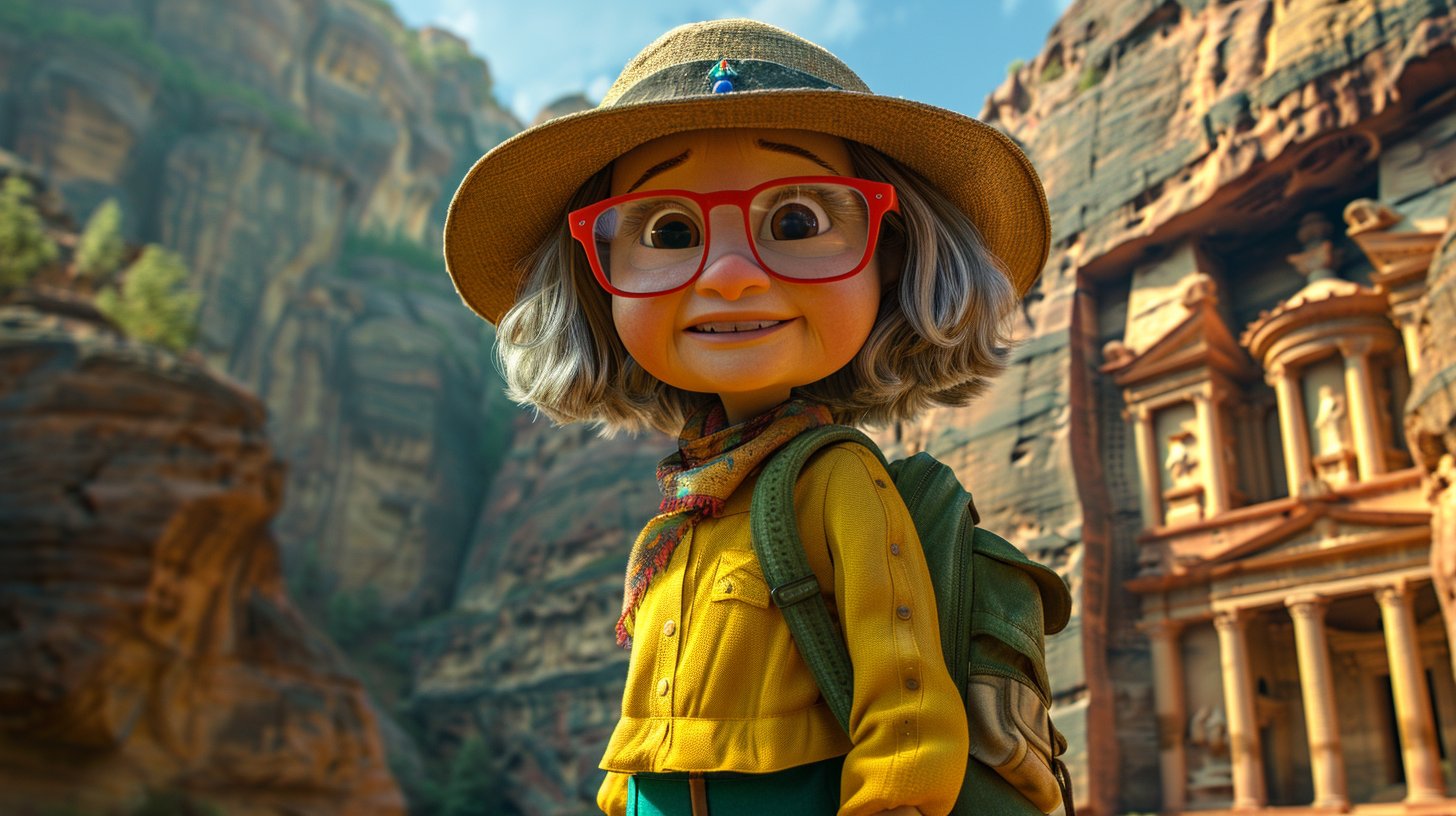
I designed a complete cast of ten characters, each with a distinct personality, role, and visual identity rooted in Bedouin culture. Ahmad's family spans three generations: his mother Raya, his father Salame, his grandmother Ageleh, his grandfather Hawmel, his paternal uncle Dakhlallah, his maternal uncle Mousa, his grandmother Naima — and his sister Fatma.

And then there is the Ghula — a mysterious creature from Jordanian folklore, dressed in black, whose red eyes peer through the dark. A touch of legend in a world of history.

Every character was created through AI generation and extensive post-production — refining proportions, expressions, costume details, and cultural accuracy in multiple iterations to achieve a coherent visual family.

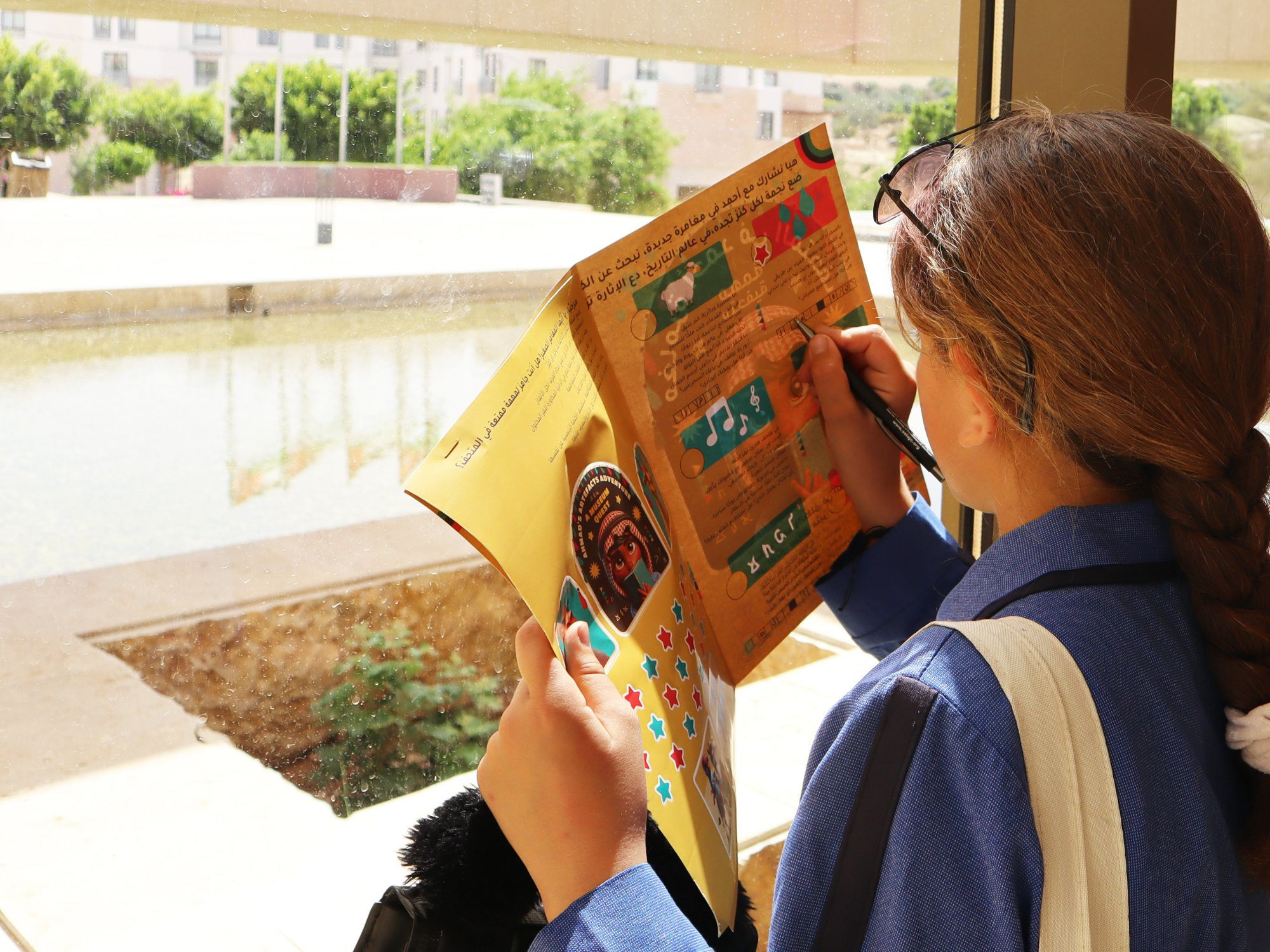
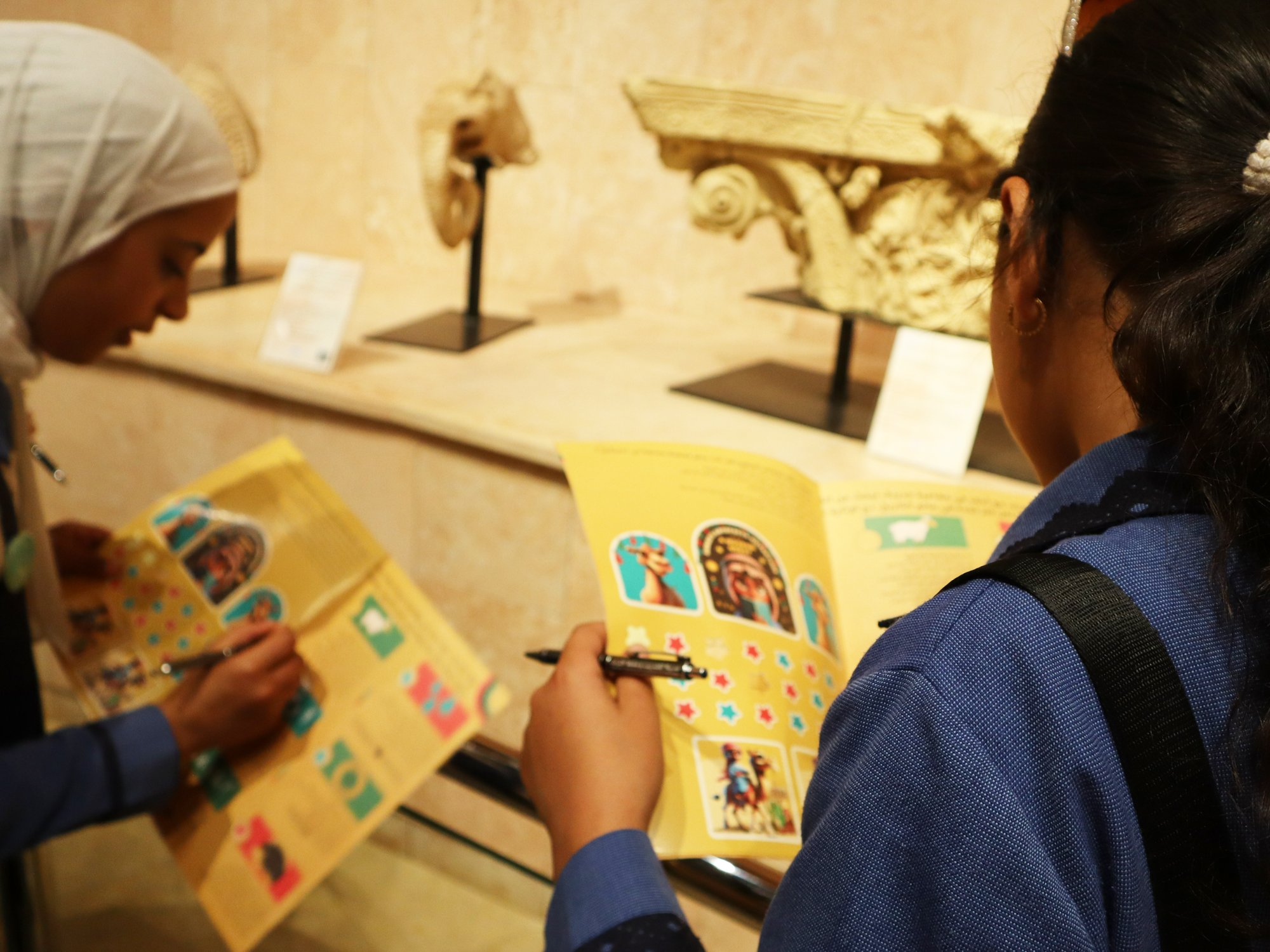
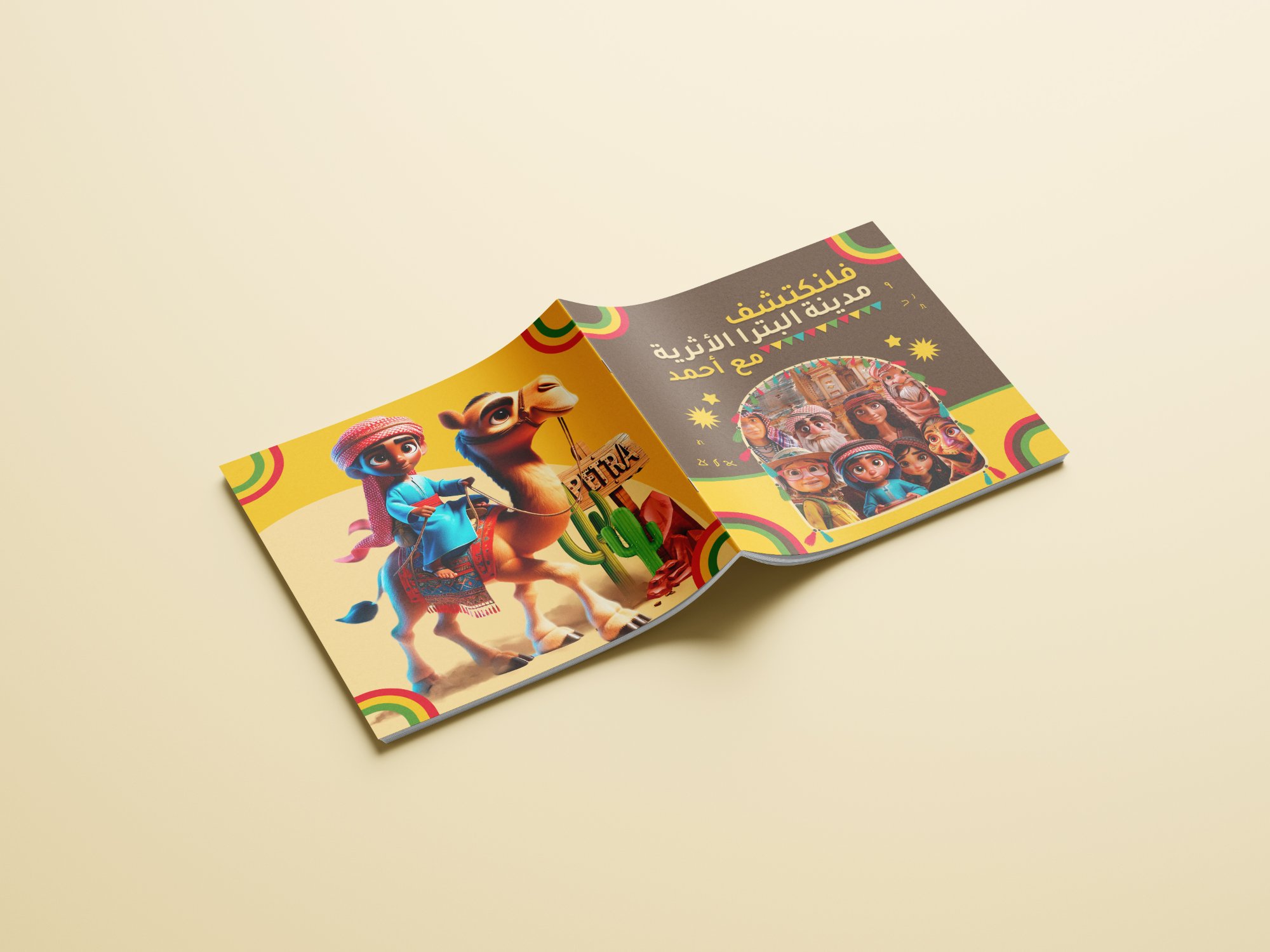
Activity book — child using it at the museum Activity book — children in the museum with artefacts Book cover — Discover Petra with Ahmad
"Every decision — story, characters, visual language, bilingual structure — was a creative direction choice. Design was the last step."
03 — The Book

An Activity Book

The centerpiece of the project is a bilingual activity book — Arabic and English — designed for children aged 6 to 12. It accompanies visitors through the park with games, puzzles, illustrated maps, and stories told by Ahmad and his family.

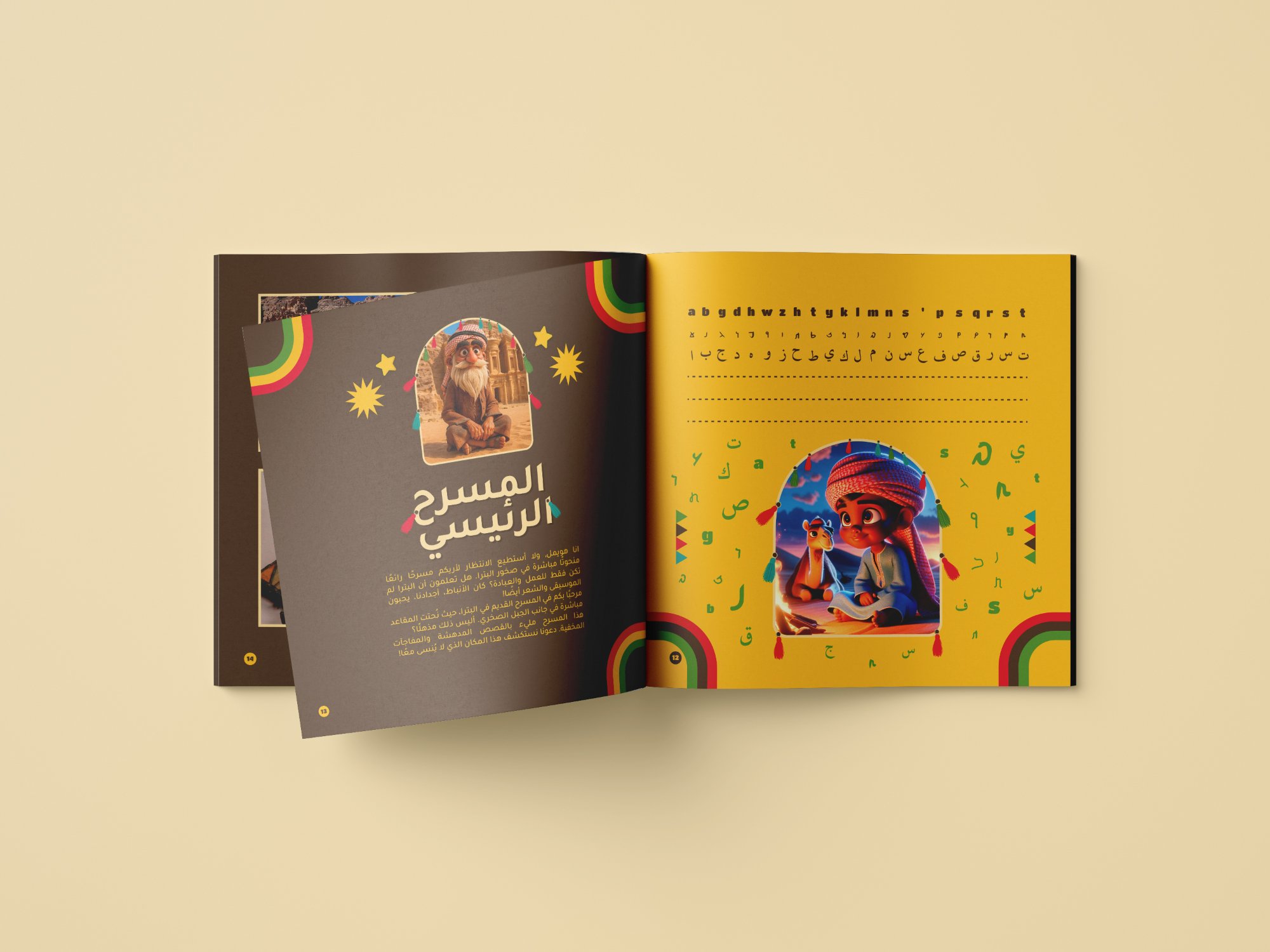
The book features the Nabataean alphabet as a learning element, illustrated scenes from Petra's history, and QR codes placed around the park that unlock additional digital content. The visual system is consistent throughout: warm ochres and terracotta, graphic borders inspired by Jordanian tatreez embroidery, and the Nabataean geometric script as decorative motif.

Every page of text was written and laid out bilingually — Arabic on one side, English on the other — maintaining visual balance between two scripts with opposite reading directions.

Book interior spread — bilingual Arabic and English Character — Bedouin elder at Petra
04 — Result

In the Hands of Children

The project was deployed across Petra Archaeological Park — books distributed at the entrance, posters in Arabic and English installed along the visitor route, QR codes embedded at key sites throughout the ancient city.

Seeing children use the book inside the museum — sitting next to Nabataean artefacts, scribbling answers, following Ahmad through the millennia — is the result that matters. Heritage made accessible, a cultural legacy brought within reach of a new generation.

← Previous Case Study Back to Work →