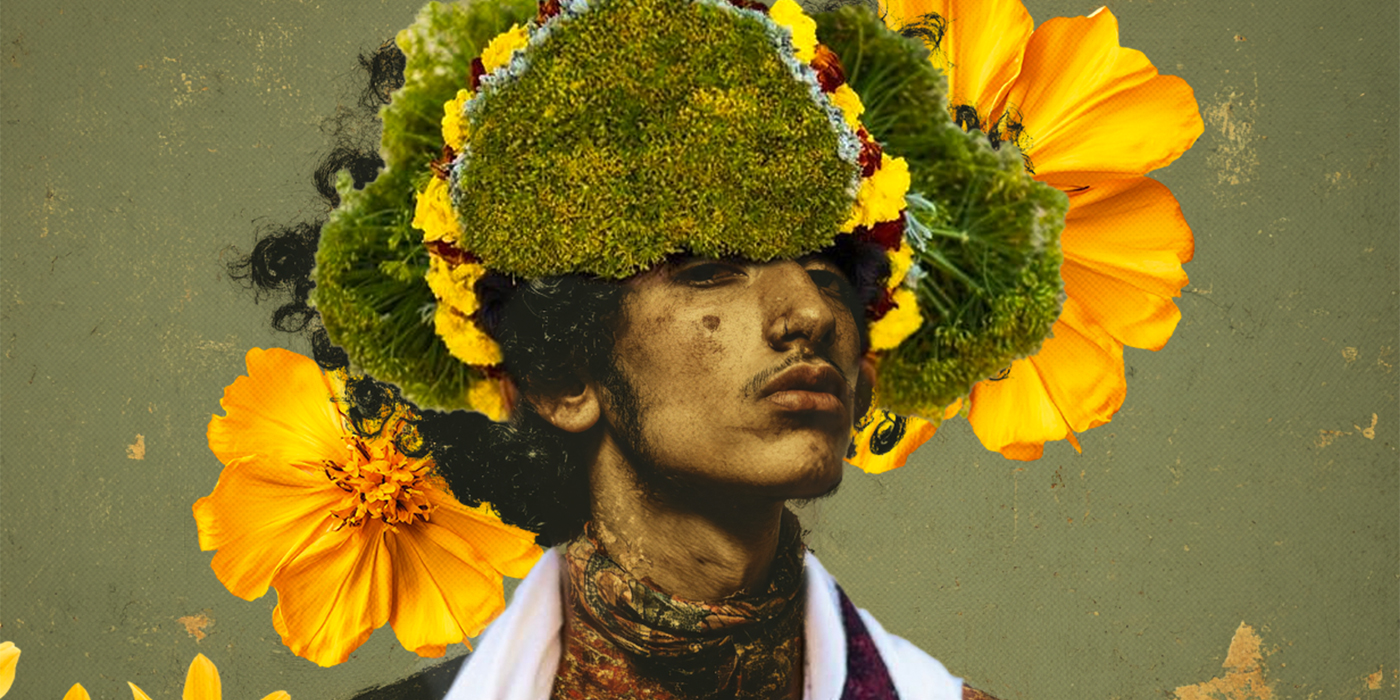
Today I discovered the Flower Men of Saudi Arabia — and I stopped scrolling. It was one of those moments where an image arrives and something in your brain quietly rearranges itself. A man, standing in the mountains of Asir, wearing a crown of fresh jasmine and wild herbs as naturally as someone else might wear a hat. Not performing. Not posing for tourists. Just existing, beautifully, inside a tradition that has belonged to his people for centuries.
It was a surprise to discover that the Qahtani tribe of the Asir region — close to the Yemeni border, in a part of Saudi Arabia that is green and mountainous and nothing like the desert landscape most of us imagine — have worn elaborate floral headdresses for as long as anyone can remember. Fresh flowers, woven every morning. Jasmine, marigold, herbs from the mountain. Worn through the day, replaced the next.
"What struck me immediately wasn't just the beauty of it — it was the composition. The weight of the crown, the colours against the skin, the way the flowers frame the face. Whoever developed this tradition had an extraordinary visual instinct."
And then I looked closer, and realised the flowers aren't random. The type, the combination, the density of the wreath — they communicate. Age, status, the nature of the occasion. It is a visual language, worn on the body. An identity system made of living material, renewed daily, read by those who share the code.
As someone who spends her days thinking about how visual systems carry meaning — how a logo, a colour, a typeface says this is who we are — I find this almost unbearably elegant. The Flower Men solved the same problem designers solve, centuries before the word 'branding' existed, using jasmine and mountain herbs.
The tradition is fading. Younger generations in Asir are less likely to maintain it. The same forces that flatten visual culture everywhere — globalisation, urbanisation, the pressure toward a unified national image — are at work here too.
Which makes it more urgent to look. To notice. To write it down. Some visual languages deserve to be seen before they disappear.